
Restaurant website design
Restaurant Website Design for High-Volume Brands and Multi-Location Operators
Built by Pine creates fast, accessible restaurant websites for operators who need guests to find the menu, choose a location, trust the brand, and take action without friction.
From a recent client launch
These visuals are from the Tatsu Ramen rebuild, used here because the page should show the kind of work it is talking about instead of leaning on generic restaurant stock.
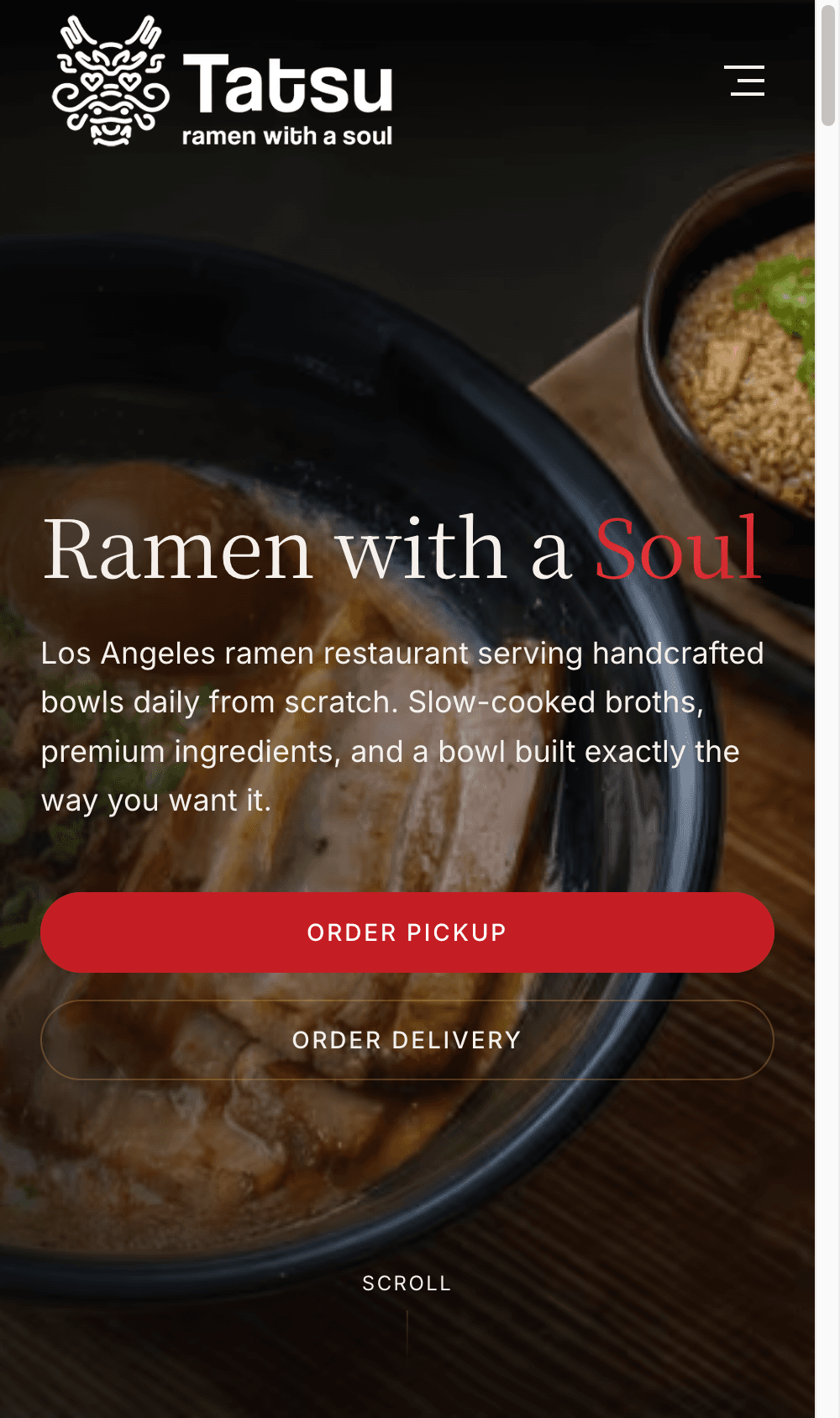
Homepage atmosphere
A real client launch built to feel cinematic on first load without losing clarity.
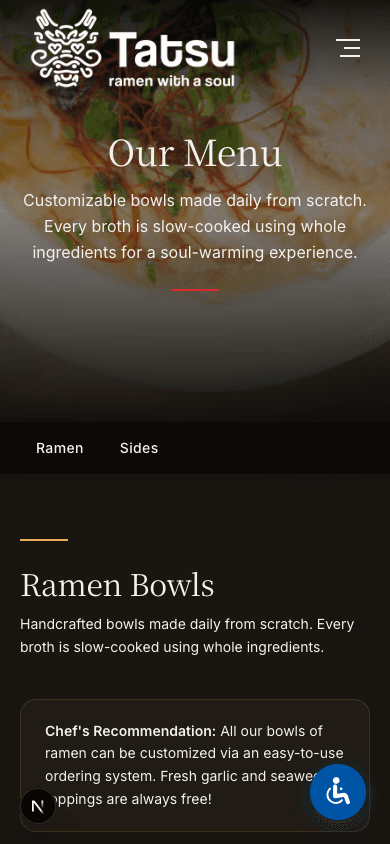
Mobile menu flow
The mobile path is shaped around what hungry visitors actually do next.
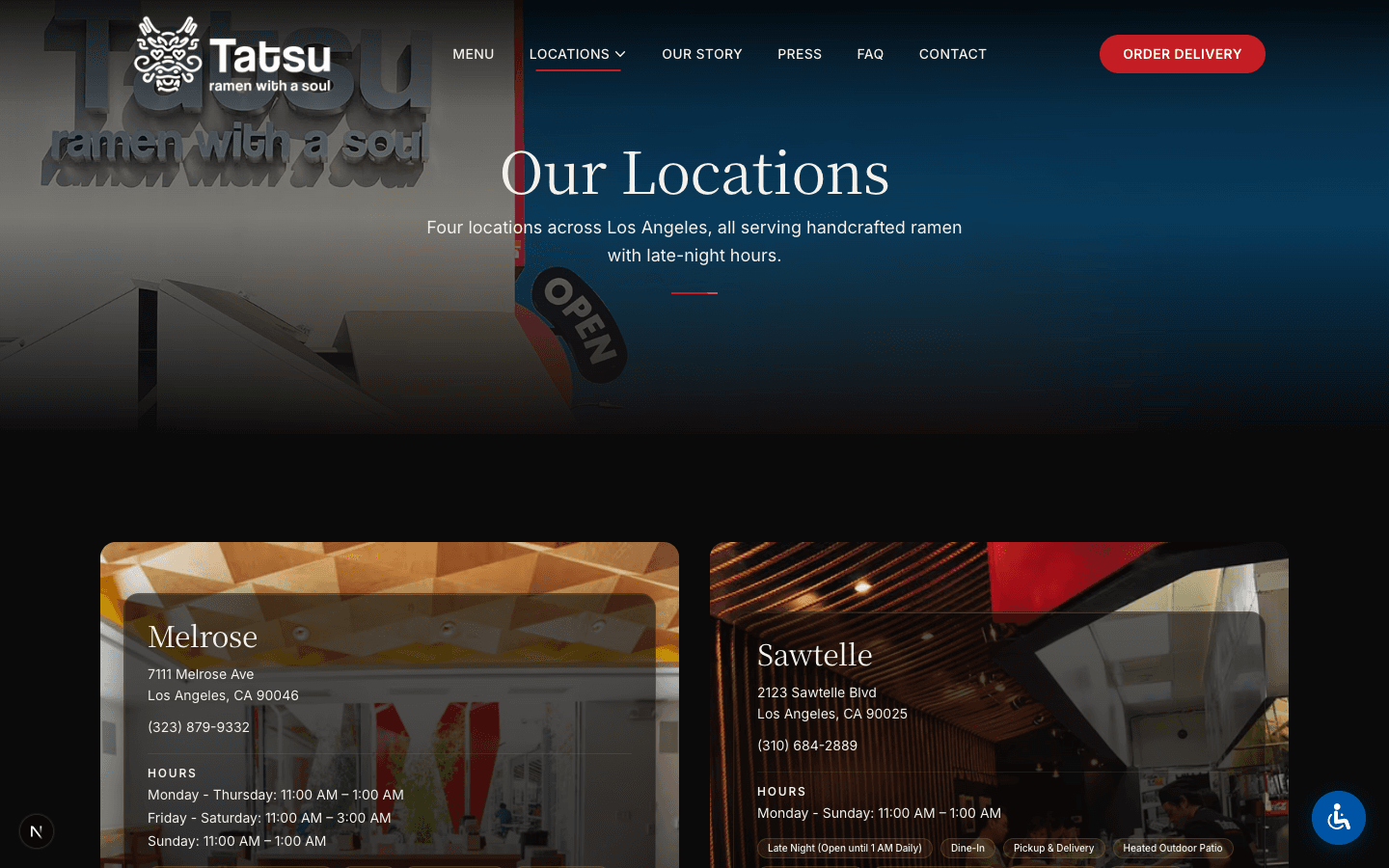
Location clarity
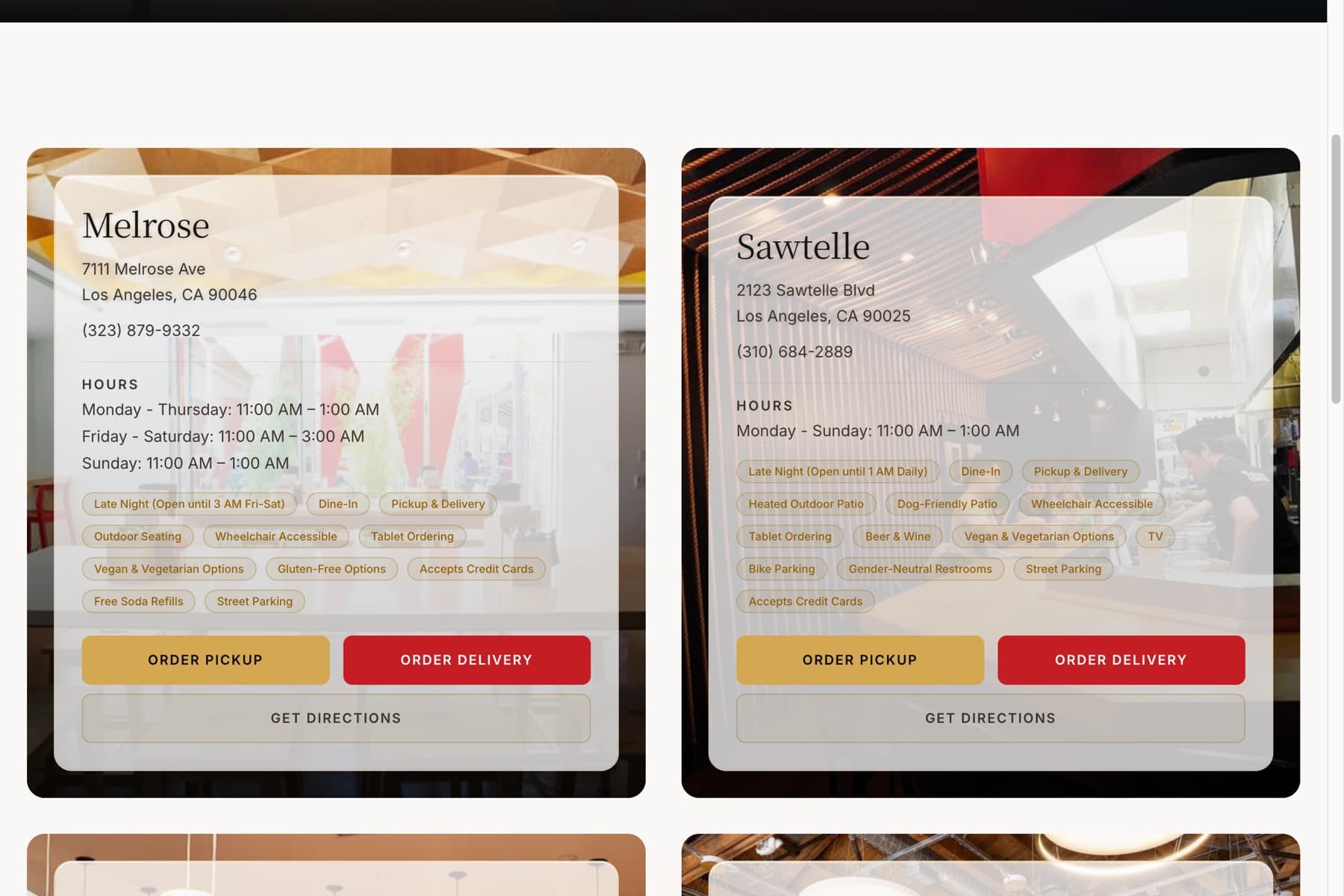
Multi-location structure is handled as core UX, not buried utility content.
Revenue leaks
Where Restaurant Websites Leak Revenue
PDF menus that cannot rank or load well
Slow mobile pages
Buried location pages
Unclear ordering CTAs
Inconsistent hours or location details
Weak Google Business Profile alignment
Inaccessible navigation or forms
Generic homepage messaging
Operational requirements
What Serious Restaurant Websites Need to Handle
Restaurant website design should be organized around the work the site has to do before guests visit, order, or reserve. The brand matters, but the path matters just as much.
Menu discovery
Multi-location clarity
Ordering and reservation paths
Local SEO
Mobile speed
Accessibility
Brand consistency
Guest trust
What’s included
A website system built for speed, clarity, accessibility, and local discovery.
The work is designed around appetite, speed, local discovery, and trust. That means the site has to feel like the restaurant, but it also has to help a visitor get to menu, locations, ordering, and reservations without friction.
For more detail, read why HTML menu pages usually work harder than PDF menus, and how restaurant accessibility fits into a stronger launch foundation.
Custom responsive website with a mobile-first layout
Indexable HTML menu pages or clear links to your ordering platform
Location, hours, reservation, and ordering paths built into the structure
Technical SEO foundations including canonicals, metadata, sitemap, and schema
WCAG-aligned accessibility practices and launch review
Performance and responsive QA before the site goes live
What we fix first
The common blockers are usually structural, not cosmetic.
We start with the points that most often slow down guest decisions: menu access, locations, search visibility, accessibility, and the CTAs that move someone from interest to action.
Replace PDF menus with HTML menu structure
Clarify location paths
Improve mobile speed
Add local SEO foundations
Strengthen CTAs
Improve accessibility and scan documentation
Create clearer hierarchy for guests
Proof
The Tatsu rebuild is the clearest example of the standard.
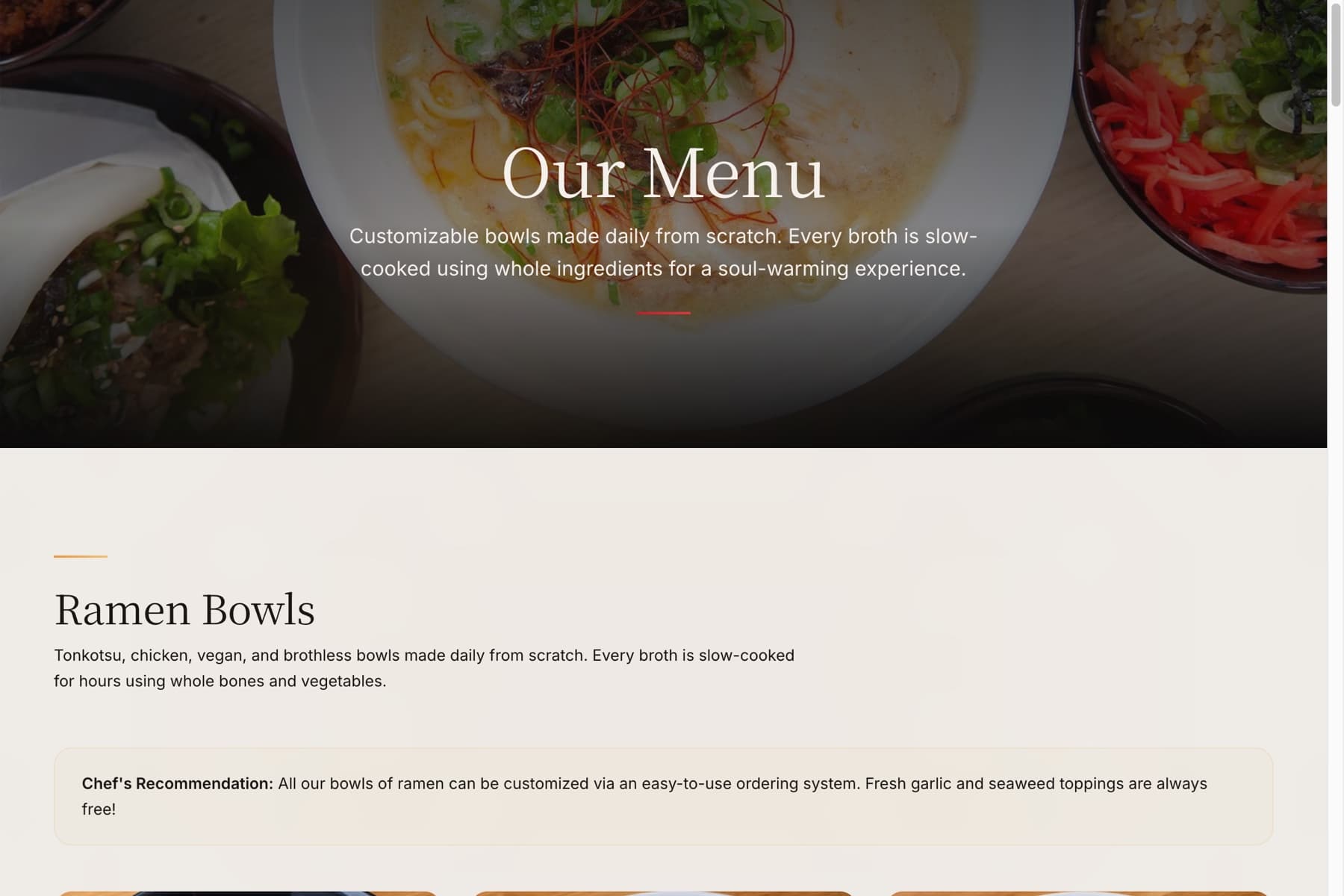
We rebuilt the Tatsu Ramen site around brand atmosphere, location clarity, and a launch-ready performance baseline. The result is a more credible first screen and a cleaner path to the actions diners actually take.
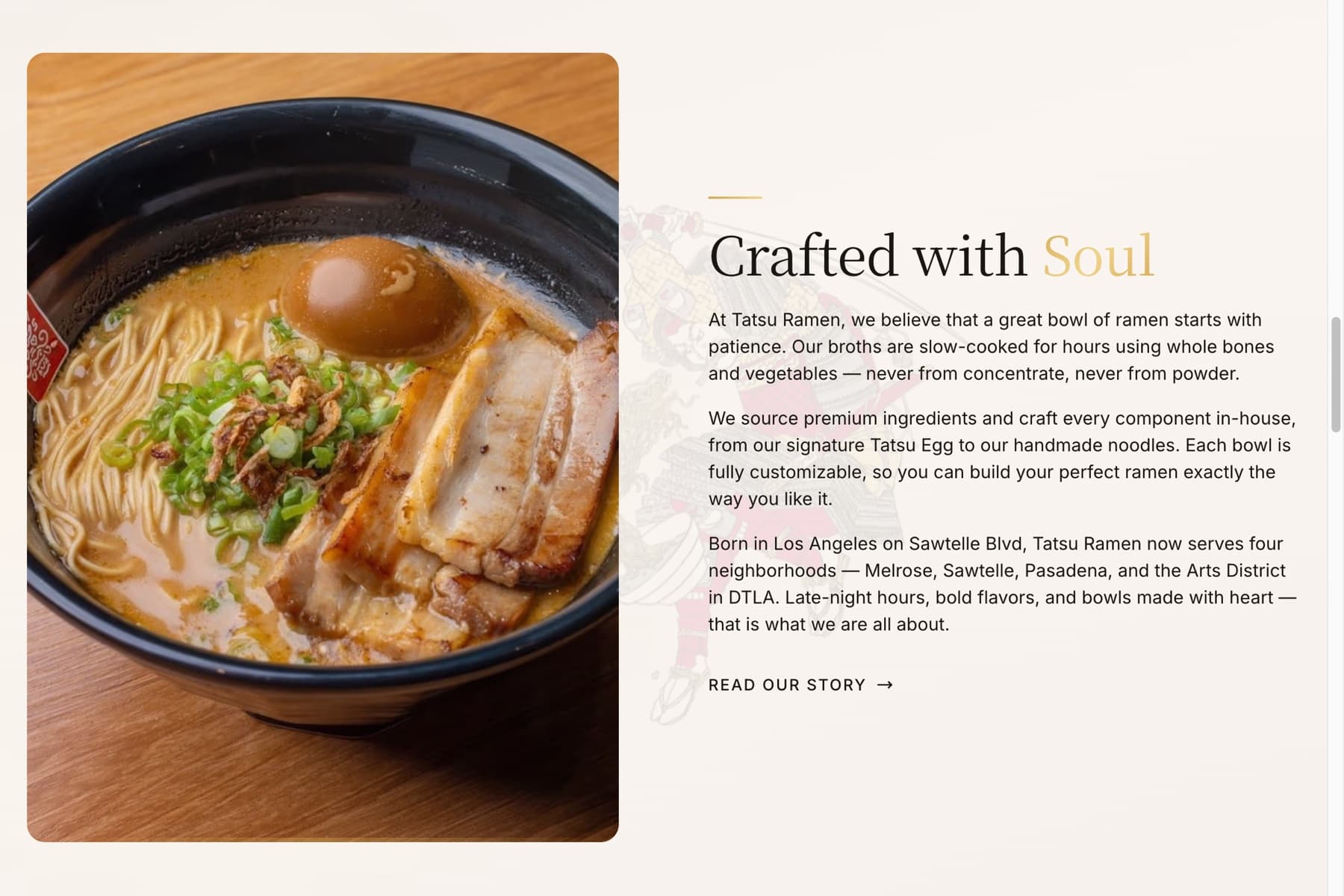
Client work
Brand-led homepage sections
Client work
Menu pages with appetite and hierarchy
Client work
Multi-location pages diners can act on
FAQ
Questions restaurant operators usually ask first.
Do you only work with restaurants in Southern California?
No. Southern California is our home market and where our location targeting starts, but we also work with restaurant brands outside the region when the fit is right.
Do restaurant websites need ADA compliance work?
Yes. Restaurant websites still need to be usable with keyboards, screen readers, and mobile assistive settings. A WCAG-aligned launch process reduces obvious risk and improves the experience for every visitor.
Can you redesign only the homepage?
Sometimes, but most restaurant sites underperform because the structure underneath is weak. We usually recommend fixing the homepage, menu path, and location flow together so the launch actually changes outcomes.
How fast can a restaurant site launch?
The right-sized projects typically launch in 7 to 14 days once content, imagery, and decision-makers are aligned.
Request a restaurant website review before another guest gets lost in the wrong path.
Send the current site and we'll review menu access, location clarity, ordering and reservation paths, local search structure, mobile performance, and accessibility basics.
Request a Restaurant Website Review